
One of our most common questions is: "What is the difference between soft enamel and hard enamel?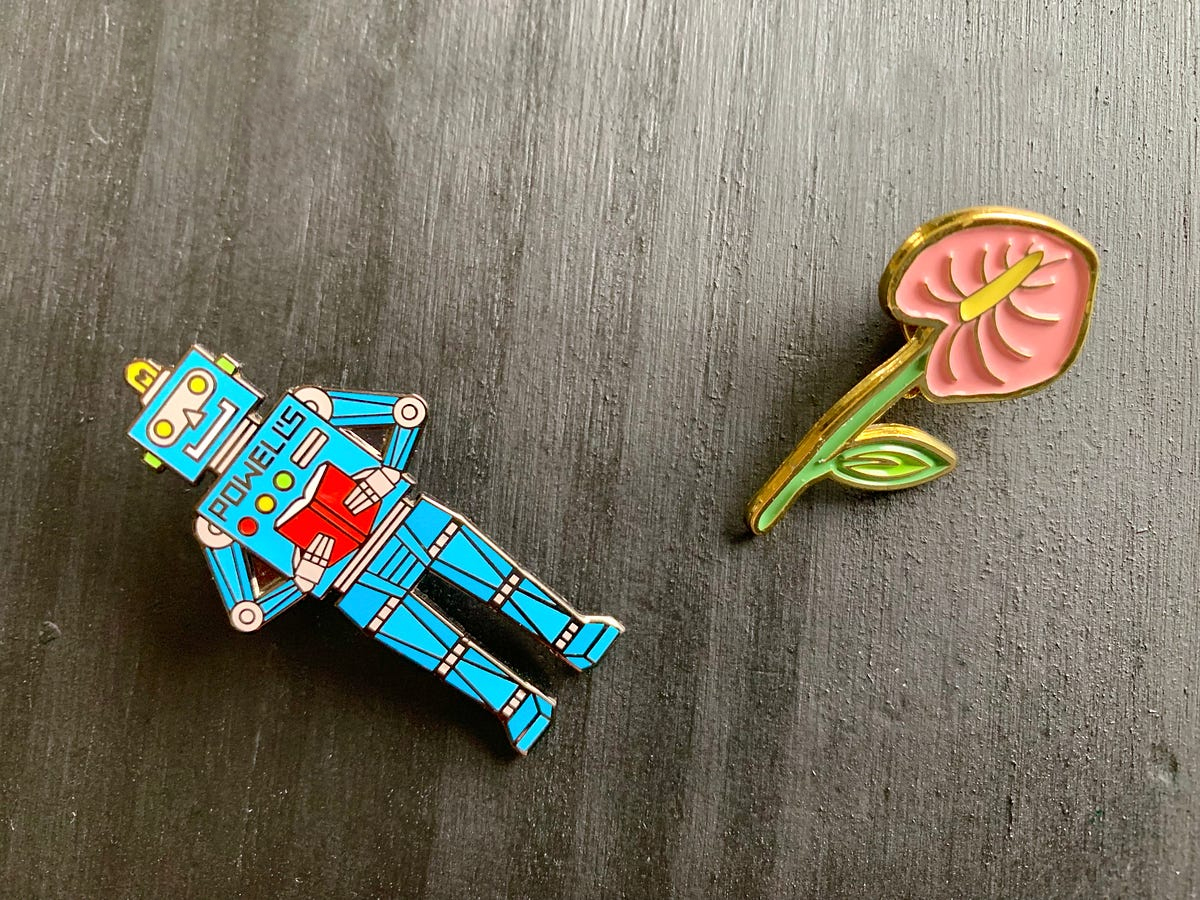
First, both hard enamel pins and soft enamel pins are very popular choices for making, selling and collecting enamel pins, and they are both made with a modern version of an ancient cloisonne technique. The general idea behind cloisonne is to use ridges on the surface of metal objects to separate and hold applications of colored enamel that will be cured and finished as needed.
All of our enamel pins can be produced using soft or hard enamel. Cloisonne process is simply adjusted to suit different materials:
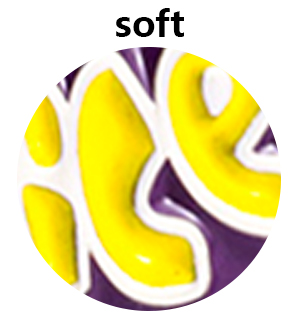
It starts as a sticky paint and then cures at temperature. The collar pin to be treated will first be imprinted to create fluted areas or bumps to accommodate the relatively free-flowing tooth enamel (think filling a shallow swimming pool). The pin is then plated with one of our metallic finishes, such as gold, silver, nickel, black or copper, and then coated with enamel paint.
Quickly heating the enamel in a special oven at a fairly low temperature produces a beautiful pin. A notable feature of this type of collar pin is that the cured enamel level will remain lower than the surrounding metal ridge, giving it a textured feel and look. The collar pins use soft enamel and can also be finished with epoxy dome protection and smoothness.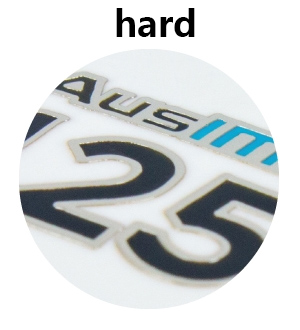
Hard enamels are made of solid resins or glass, which cure at much higher temperatures than soft enamels. The process of making a hard enamel lapel pin is very similar to that of a soft enamel lapel pin, but the process that follows is much more complicated.
The resin of the chosen color is added to the appropriate part of the pin, curing one at a time, and then each is polished or almost polished to bring it down to the level of the exposed ridge of the pin. Finally, the pins will be electroplated before the final polishing.
Tell me which way is better, your stuff made!
Each of these two methods has its own advantages and characteristics. Some of the most important questions to consider when choosing between them include:
·Cost. Collar badges made of soft enamel are often much cheaper than those made of hard enamel. Since hard tooth enamel requires a lot of labor-intensive production processes, this is almost inevitable.
·Details. Although the differences are usually small, soft enamel pins are often able to show a clearer, more detailed image. Because hard enamel pins have been polished many times, their exposed ridges become rounder and more stretched.
·Elegant. Pins made with modern hard enamel technology can very closely reflect the effect of classical cloisonne technology. While a well-designed, well-made soft enamel pin should always be attractive, it usually won't be as elegant as a hard enamel pin.
·Durability. Hard enamel is inherently more scratch-resistant and durable than soft enamel. However, pins made of soft enamel can be coated with a layer of epoxy to prevent damage.
·Texture. A bare soft enamel lapel pin will have a texture due to the difference in height between its painted parts and the metal ridges between them. Because the areas to be colored on hard enamel pins are overfilled and then polished after curing, the look and feel are smoother. When soft enamel pins are covered with epoxy, the smoothness of the surface will replace the usual texture.
Both soft and hard enamels can be used to make truly attractive and appealing custom lapel pins. Understanding how each process works, and the typical benefits of each process, will make it easier for you to make the appropriate choice.
Any other questions? Read our other blogs or contact us directly via email /WhatsApp.
 Custom Product Ideas for Thanksgiving Merch
 Custom Product Ideas for Halloween Merch
 Yes to Glitter Enamel Pins
 How to Make Pin Backing Cards